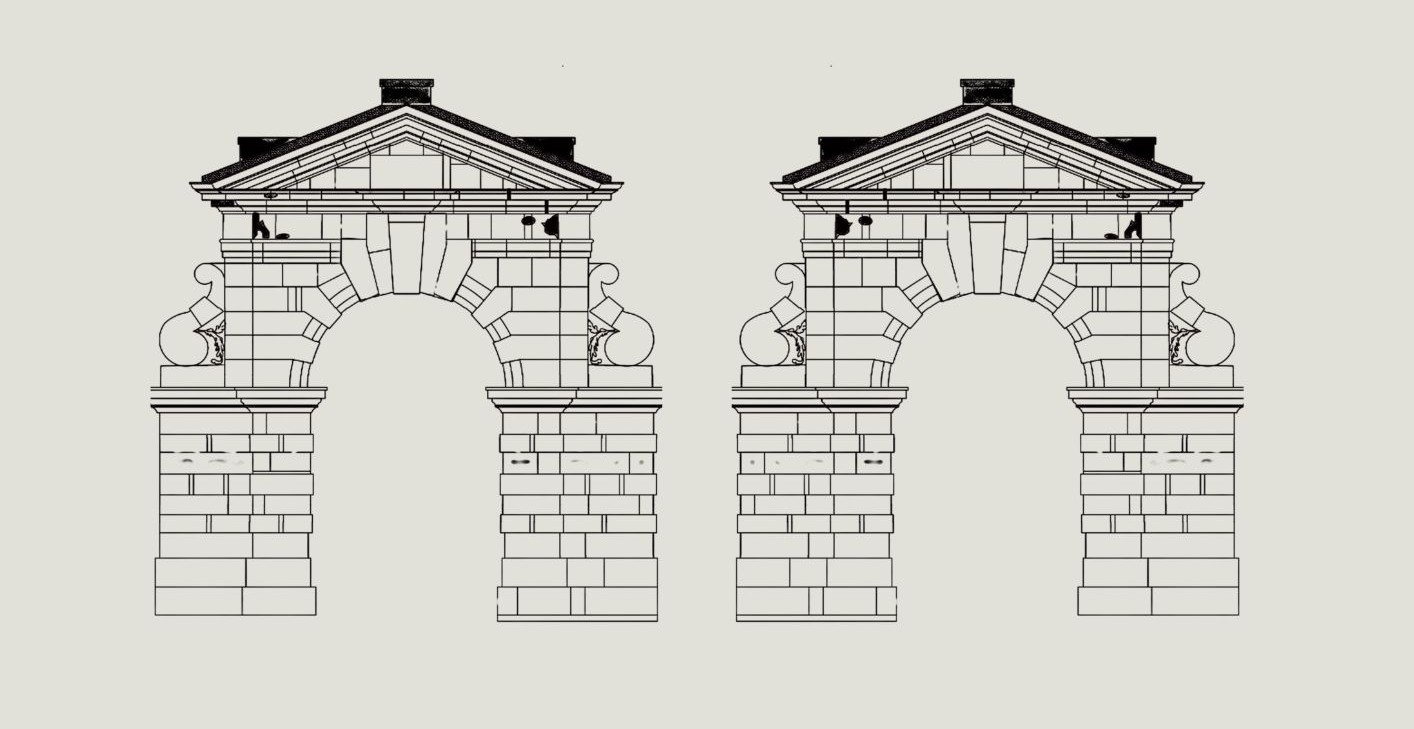
The Leoni Arches
Help Us Protect These Iconic Features
We are urgently fundraising to conserve the historic Leoni Arches on the North Front of Stowe House. These remarkable eighteenth-century structures have stood for almost 300 years, but centuries of exposure to wind, rain and frost have left them in urgent need of specialist conservation.
A recent condition survey found both arches to be in poor condition. While the overall structure remains stable, the sandstone surface and decorative details are steadily deteriorating and require careful intervention to prevent further loss of original historic fabric.
The full conservation project forms part of a wider restoration need now estimated at £1 million. Every donation, large or small, will help us take the next steps towards protecting these rare architectural features for future generations.
Your support will help us to:
- protect nearly 300 years of architectural history;
- preserve one of the few surviving works of Giacomo Leoni at Stowe;
- fund specialist conservation planning, design work and permissions;
- prepare for the next phase of conservation works;
- ensure future generations can continue to enjoy these remarkable structures.
Ready to help? Donate today and select ‘The Leoni Arches’ from the ‘Select Fund’ drop-down menu to direct your gift to this project.
Why the Arches Matter
The arches are attributed to Giacomo Leoni, a Venetian-born architect who brought the principles of Palladian design to Britain in the early 18th century. His most famous stately home in England is Clandon Park in Surrey, making his contribution to Stowe particularly significant.
His work at Stowe is unusual. By the 1740s, Lord Cobham had already engaged leading English designers including Vanbrugh, Bridgeman, Kent and Gibbs to work on the house and gardens. The decision to commission Leoni suggests a desire to enrich the estate with a range of celebrated architectural voices.
Interestingly at any one time, there were once three sets of arches in this area of the North Front, designed by Leoni, William Kent and Vincenzo Valdre. The Valdre arches have since disappeared, while the Kent Arches were restored in 2002. The Leoni Arches are therefore a rare and fragile link to Stowe’s early architectural development and to the remarkable group of architects who helped shape the estate.
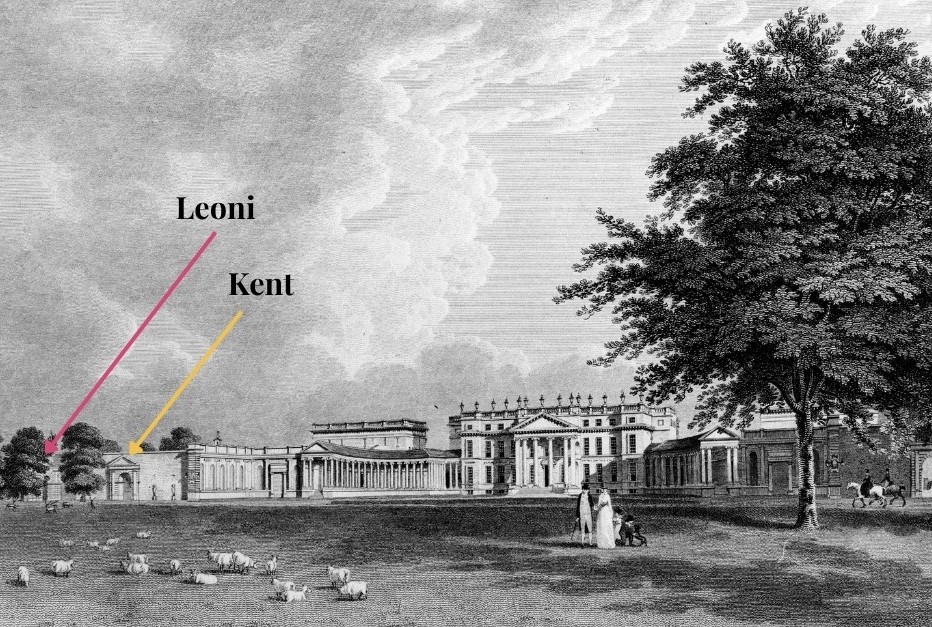
This 1797 Medland engraving shows the North Front with the two exisitng arches. Each arch has a matching counterpart on the opposite wing, creating a perfectly symmetrical design.
Why the Arches Need Saving
The arches stand in an exposed position on the North Front, facing both east and west. For nearly three centuries they have endured driving rain, strong winds and repeated freezing winters.
Over time, moisture has penetrated the fragile sandstone. During freezing conditions this moisture expands, gradually breaking down the surface and causing flaking, pitting and the loss of carved detail.
The eastern arch is also used daily as a thoroughfare, increasing wear and the risk of accidental damage. Environmental erosion, water run-off and previous repair campaigns have all contributed to the current condition.
Although the structure itself remains sound, the recent survey concluded that urgent conservation is needed to prevent further deterioration. Some earlier repairs, including cement-based mortars and plastic fills, are now failing and will need to be carefully reviewed as part of the project.
Without action, more of the original eighteenth-century stonework will gradually be lost.
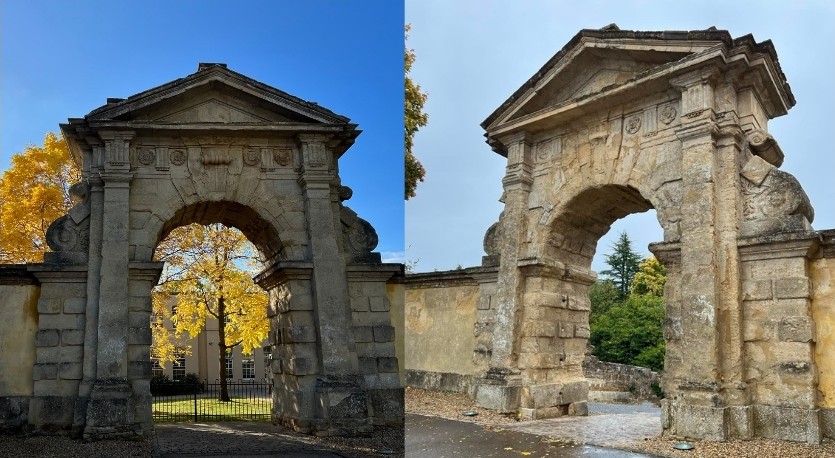
The Leoni Arches as they stand today—west to the left, east to the right

What We've Done So Far
Every major conservation project begins with investigation.
In the summer of 2025, specialist conservators carried out detailed surveys and emergency stabilisation works. Loose material was carefully removed, fragile areas were assessed and experts began building a detailed understanding of the arches’ condition.
These investigations revealed that the deterioration is more extensive than originally anticipated and have helped us understand the scale of work needed to secure their future.
To date, we have invested more than £9,000 in specialist surveys and emergency stabilisation.
Pictures Of The Work To Date
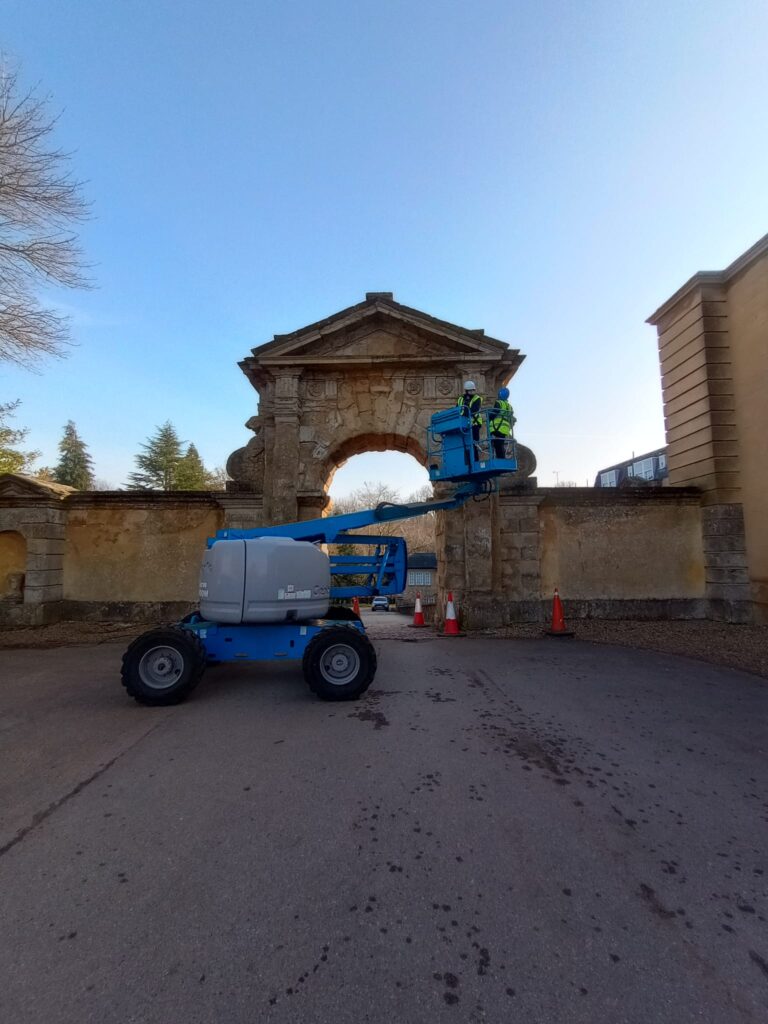
Specialists take a closer look at the condition of the East Leoni Arch. Summer 2025
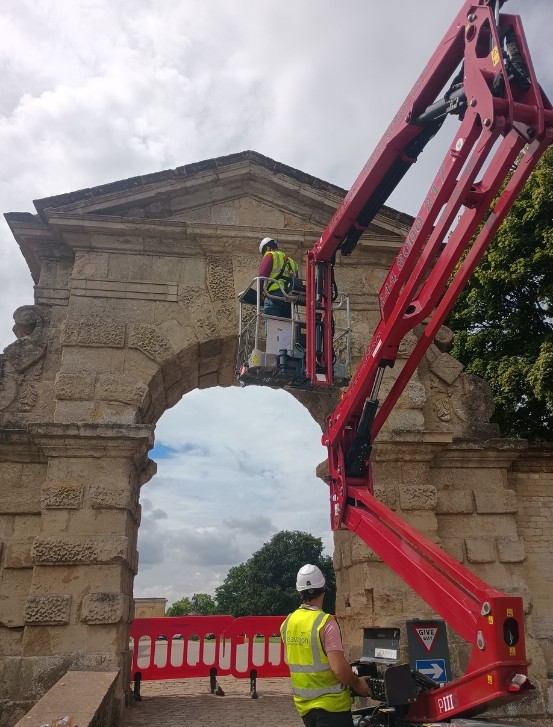
Using a crane, the team took a look at the levels of stone deteriation. Summer 2025
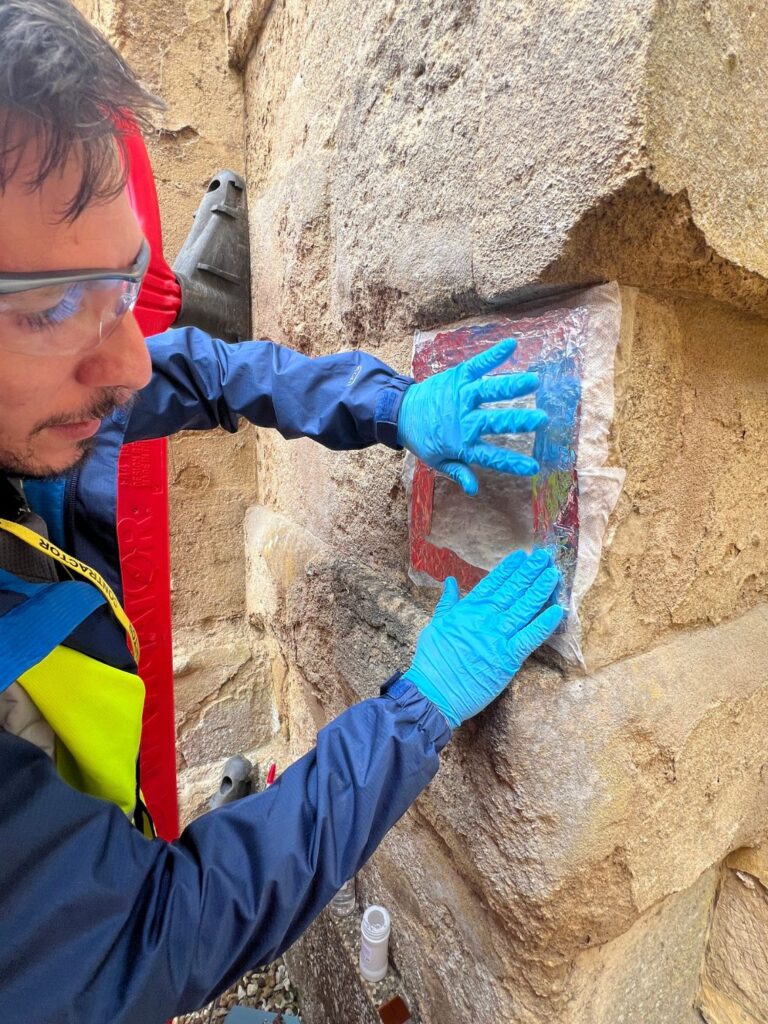
Tests using the nano-lime technology were undertaken in April 2026 on the East Leoni Arch
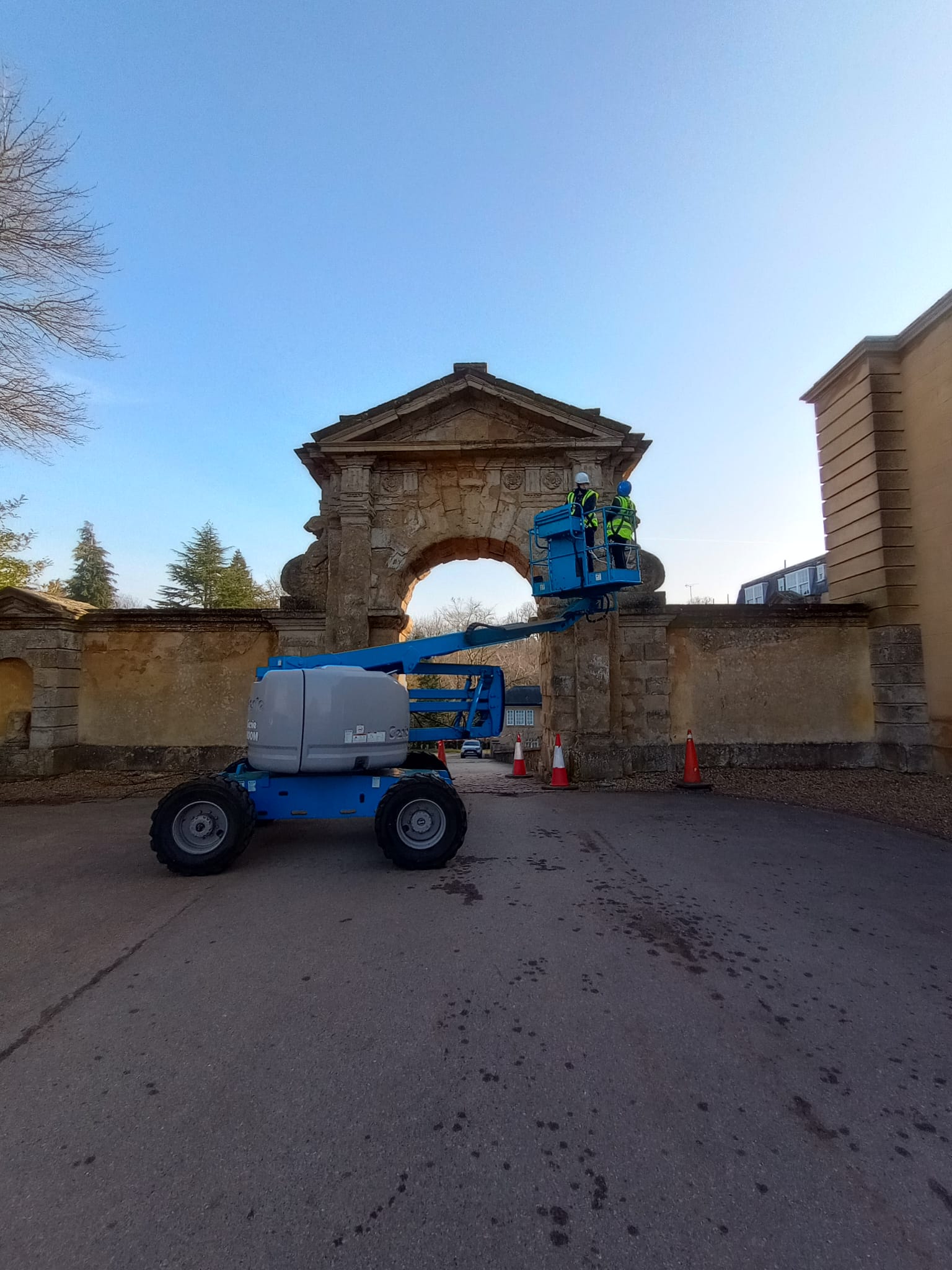
Specialists take a closer look at the condition of the East Leoni Arch. Summer 2025
Using a crane, the team took a look at the levels of stone deteriation. Summer 2025
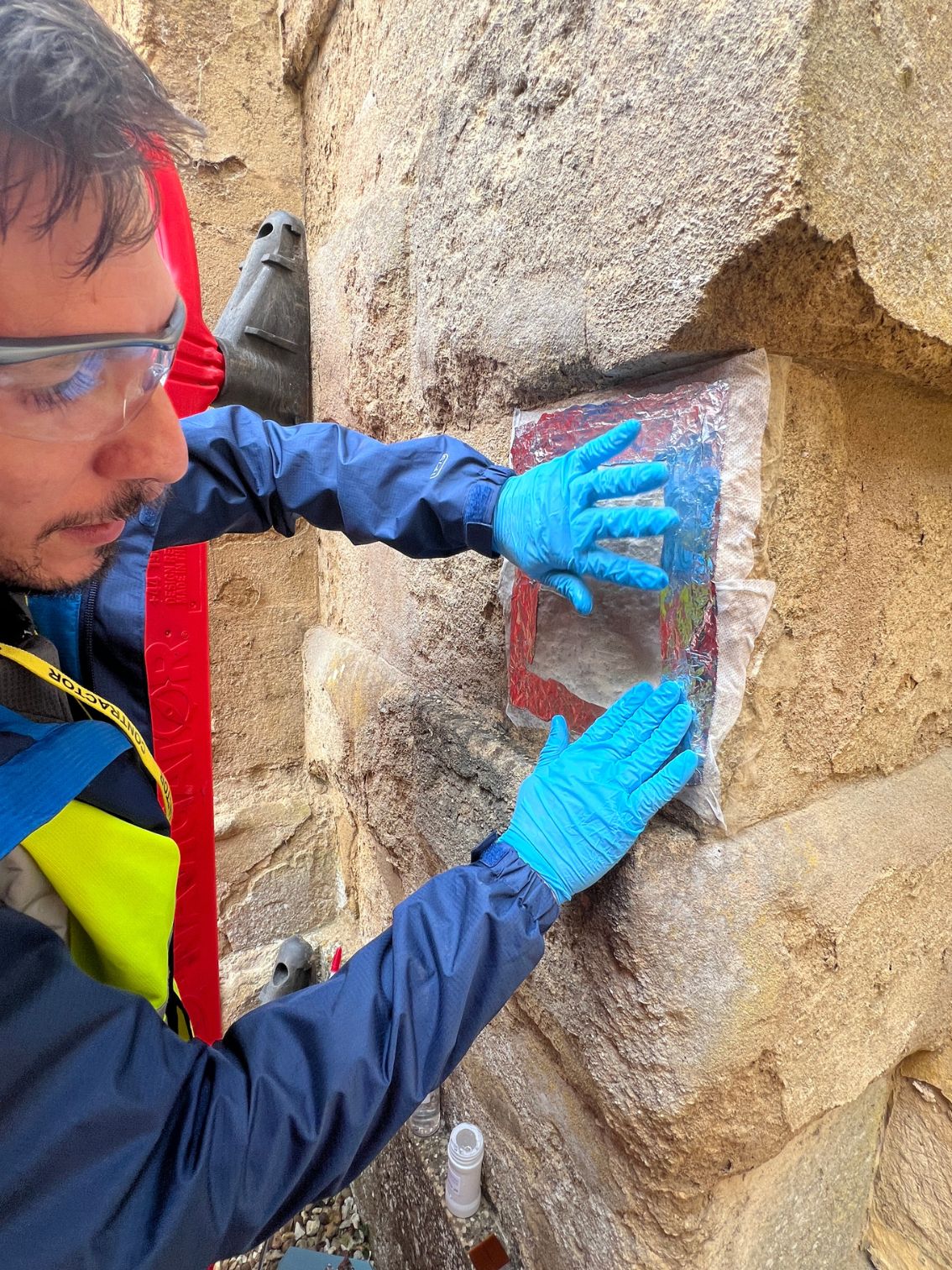
Tests using the nano-lime technology were undertaken in April 2026 on the East Leoni Arch
What's Next?
We are currently seeking specialist advice on how far we need, and want, to restore the arches. The challenge is to strike the right balance between retaining their historic character while ensuring their long-term stability and protecting the architectural details that make them so special.
Initial work may involve restoring important ‘drip’ features, which help rainwater run away from the stonework, and exploring ways to better protect the pediments from future water damage.
Before any major conservation work can begin, we also need to complete project design work, obtain the necessary permissions and secure significant funding. Like many heritage projects, this process takes time, but every stage is essential to ensuring the best possible outcome.
At present, it is unlikely that major conservation work will begin before 2027.
Exploring Innovative Conservation Techniques
Alongside traditional conservation methods, we are exploring pioneering techniques in partnership with conservation specialists and university researchers.
Trials of an advanced nano-lime treatment are being carried out on selected areas of the East Arch. This process introduces microscopic lime particles deep into weakened stone, strengthening it from within.
If successful, it could reduce the need for more invasive repairs and help preserve more of the original eighteenth-century fabric.
Why This Matters
The conservation of the Leoni Arches will benefit thousands of people every year by:
- protecting a rare example of Giacomo Leoni’s work in England;
- preserving nearly 300 years of architectural history;
- safeguarding an important part of Stowe’s North Front;
- supporting future learning and interpretation opportunities;
- benefiting more than 15,000 annual visitors and the wider Stowe community.
Support the Project

The total estimated cost of conserving the Leoni Arches is significant, and sits within a wider restoration need of £1 million. We are actively seeking grant funding and charitable support to make this work possible.
Every donation, large or small, helps us continue the planning, specialist investigations and fundraising needed to secure the future of the Leoni Arches.
Please give what you can today and help protect these remarkable eighteenth-century structures for future generations.
Make a GiftThanks To
We are deeply grateful for the support and expertise of our contractors.
If your organisation would like to support the project, please get in touch with our Marketing & Fundraising Officer.
For Your Interest

Heading indoors, we have yet another project underway. After a chance discovery in 2017, we now are uncovering the hidden eighteenth-century wall paintings that lay beneath six layers of modern paint.
We have an archive of over 25 years of restoration waiting to be discovered. Travel back in time in this visual article to see the transformations of State Rooms and exteriors.
Delve into 300 years of fascinating tales which track the Temple-Grenville family’s rise and fall from prominent aristocrats to the greatest debtors in the world.